
Early Literacy: Building a Love of Books
Before the First Book: How a Love of Reading Begins in the Early Years
Ask most parents when reading starts and they will say school. Ask an early childhood educator and the answer is much earlier. It starts with a baby turning towards a familiar voice, a toddler pointing at a picture and naming it, a three year old retelling a story with the pages upside down.
Literacy is not a switch that flips in kindergarten. It is a long, gradual build, and the early years carry most of the weight. At Chipmunks Childcare, literacy runs through the whole day rather than sitting in a single time slot.
What early literacy actually means
Early literacy is everything a child learns about language and story before they can read independently. It includes:
Oral language: vocabulary, sentence structure and the confidence to talk
Phonological awareness: hearing rhyme, rhythm and the individual sounds in words
Print awareness: knowing a book has a front and back, that words carry meaning, that we read left to right
Letter knowledge: recognising letters and the sounds they make
Narrative skills: understanding that stories have a beginning, a middle and an end
Fine motor control: the hand strength and coordination that later makes writing possible
A child who is strong in these areas arrives at school ready to learn to read. A child who is not spends their first year catching up.
Stories, songs and conversation
The most powerful literacy tool in any early learning room is not a worksheet. It is conversation.
Educators talk with children constantly, and deliberately. We describe what we are doing, we name new objects, we ask open questions that need more than a yes or no, and we wait for the answer. Every one of those exchanges adds words to a child's bank and models how sentences work.
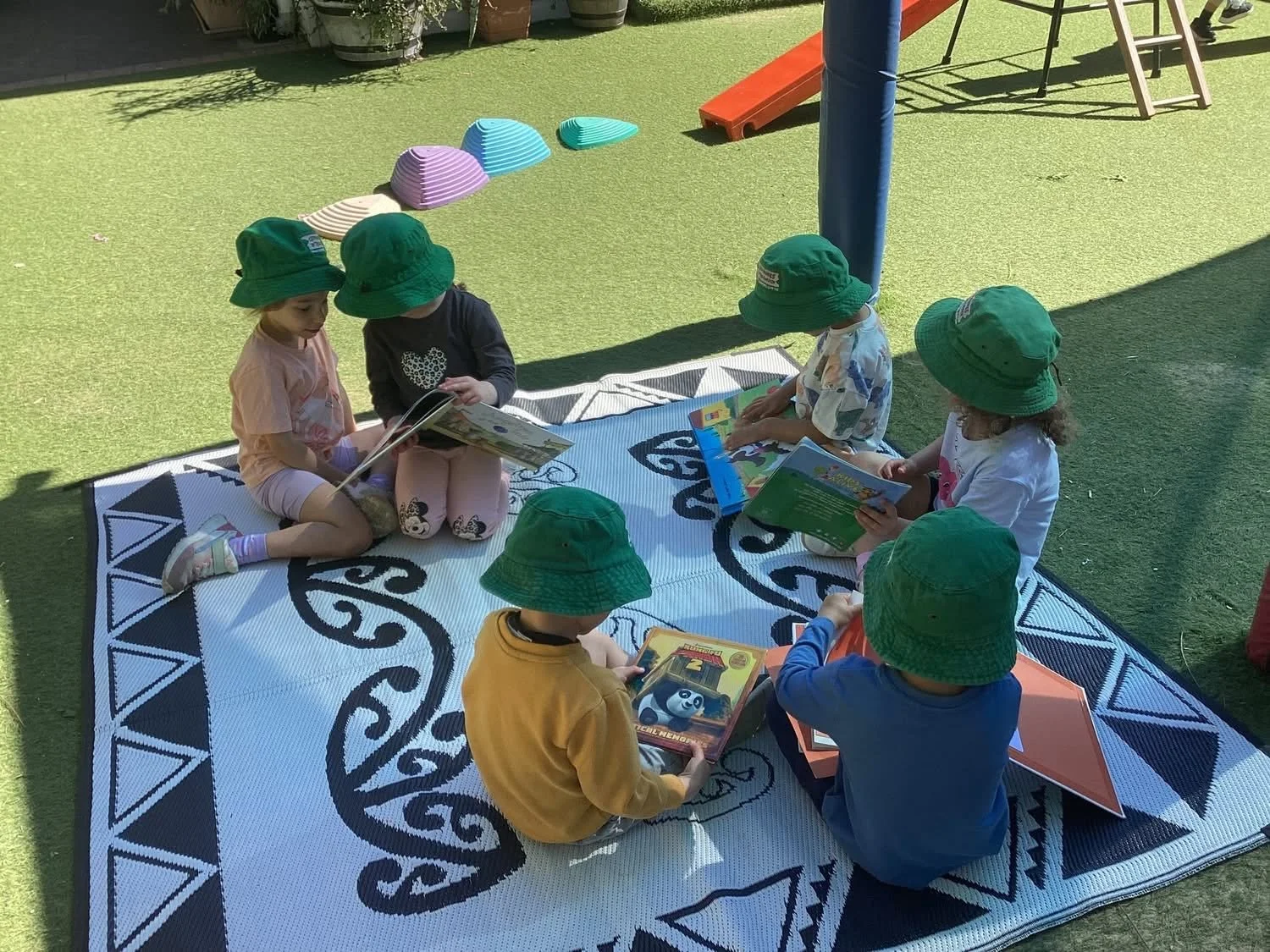
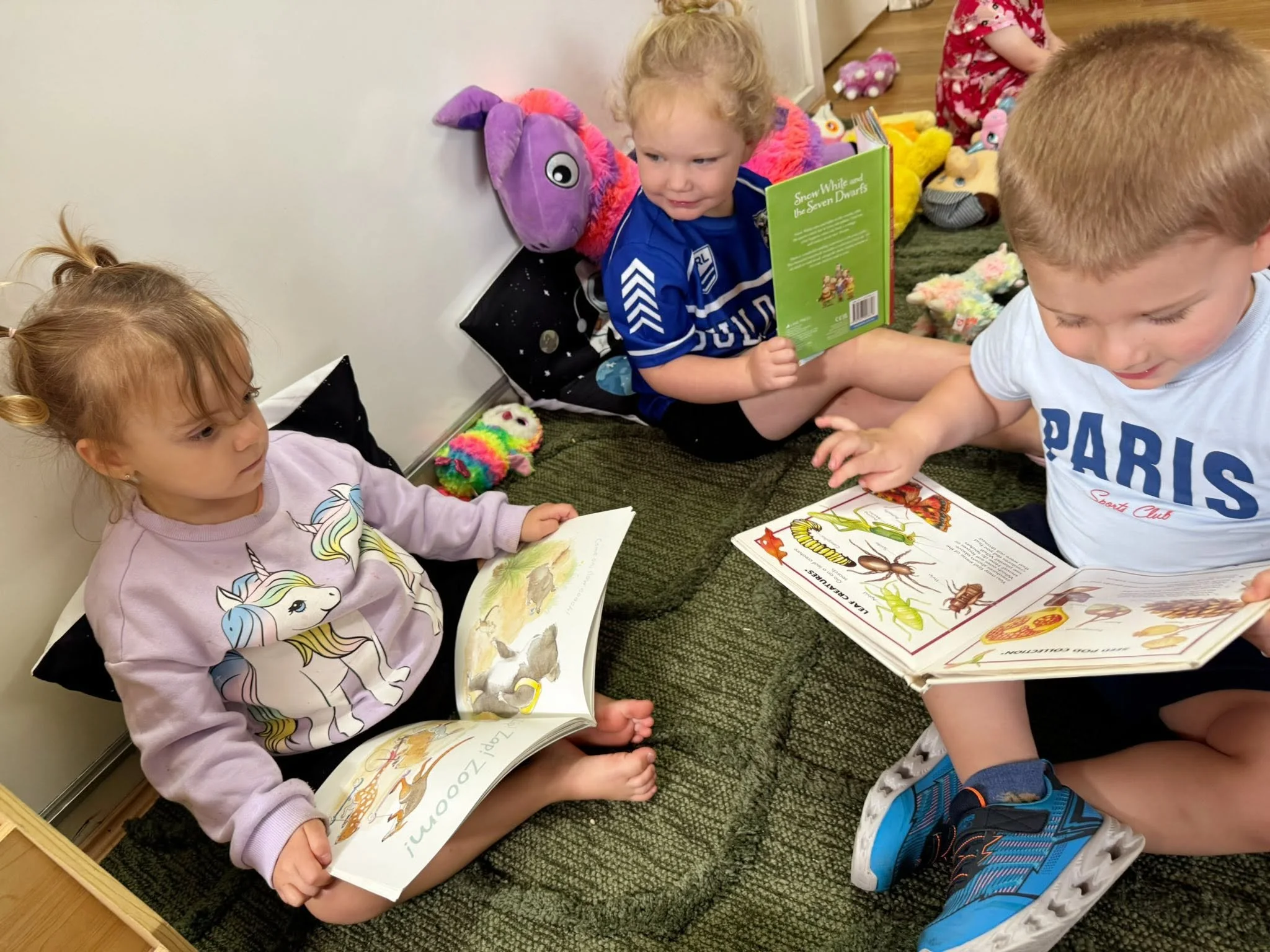
Shared reading does the same thing with richer language. Picture books use vocabulary that rarely comes up in daily chat, which is why reading the same book many times is so valuable. Songs, rhymes and finger plays add the sound layer, teaching children to hear syllables and rhyme, which is the foundation of decoding words later on.
Book Week is a highlight in our centres each year, with dress up days, favourite characters and storytelling that turns reading into something children get excited about. That excitement matters as much as any skill.
Building school readiness
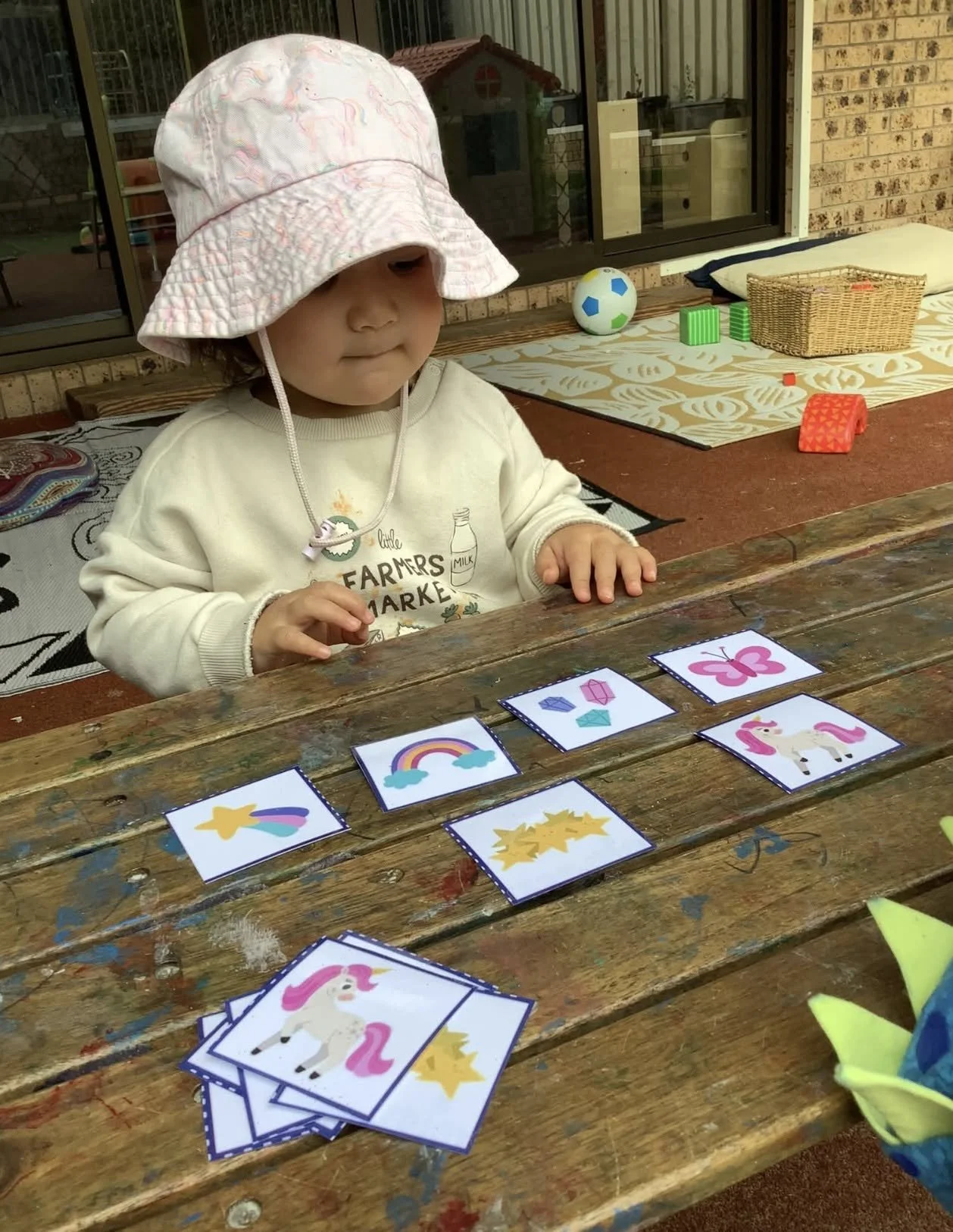
In our preschool rooms, literacy becomes more structured as children move closer to school. Our School Readiness Program includes focused work on letter recognition and formation, name writing, sound and letter matching, and words that start with a given letter. Children practise holding a pencil, forming shapes and lines, and eventually writing their own name.
We keep it playful on purpose. A child who traces a letter in sand, builds it from playdough, hunts for it in a book and then writes it has met that letter four different ways. Repetition through play sticks better than repetition through drilling, and it protects the thing that matters most, which is that the child still wants to do it.
Fine motor work supports all of this. Threading, cutting, stamping, painting, tearing paper and using tongs all build the small hand muscles that writing depends on. Children rarely notice they are doing literacy work at all.
For babies and toddlers
For our youngest learners, literacy is sensory and social. Board books that can be chewed, patted and dropped. Repetitive rhymes with actions. Educators naming what a child is looking at. Simple picture books read on a lap.
Do not worry if a toddler will not sit for a whole book. Turning pages, pointing, naming one thing and walking away is still reading behaviour. Consistency matters more than length.
What families can do at home
Read daily, even briefly. Ten minutes every night beats an hour on Sunday
Reread favourites. The tenth reading is where the language really lands
Talk about the pictures. What do you think happens next? Why is he sad?
Let your child hold the book and turn the pages, even out of order
Point out print in the world: street signs, shopping lists, cereal boxes, their name on a bag
Sing. Nursery rhymes are phonics in disguise
Visit your local library. A free borrowing card keeps new books coming without cost
Want to see how literacy runs through our day? Book a tour at your nearest Chipmunks Childcare centre and visit during story time
