
Small Hands, Big Impact: Teaching Sustainability in Early Childhood
Why Start So Young?
It can seem like sustainability is a topic for older children, but the early years are the perfect time to begin. Young children are naturally curious about nature, and the habits and attitudes they form now often stay with them for life. When caring for the environment is simply part of everyday routine, it never feels like a chore.
The EYLF encourages children to become socially responsible and to show respect for the environment. Sustainability learning in the early years is not about worrying children with big problems. It is about helping them feel capable, connected and hopeful. Children do not need to understand climate science to care about the world. They simply need plenty of chances to enjoy nature, notice how it changes and feel that they can help look after it.
Sustainability learning also connects with many other parts of the early years curriculum, from counting seeds and measuring plant growth to talking about seasons, weather and where our food comes from.
Responsibility: Small jobs like sorting recycling help children feel trusted and capable.
Connection to nature: Time in gardens and outdoors builds a love for the natural world.
Problem-solving: Thinking about how to reuse materials encourages creative thinking.
Early science: Watching plants grow teaches life cycles, cause and effect, and patience.
Community mindset: Children learn that looking after the environment is something we do together.
Caring for Our Planet in Practice
Sustainability has been a recurring theme across our centres, often linked to events like Clean Up the World.
Preschool children have talked about why it is important to keep our environment clean and how we can reduce waste by reusing and recycling. They explored different recyclable items, sorted materials and thought about how their everyday choices can help protect the world around them. Younger groups explored recycling, reusing and reducing waste in age-appropriate ways, and loved discovering that even small actions can help look after the planet.
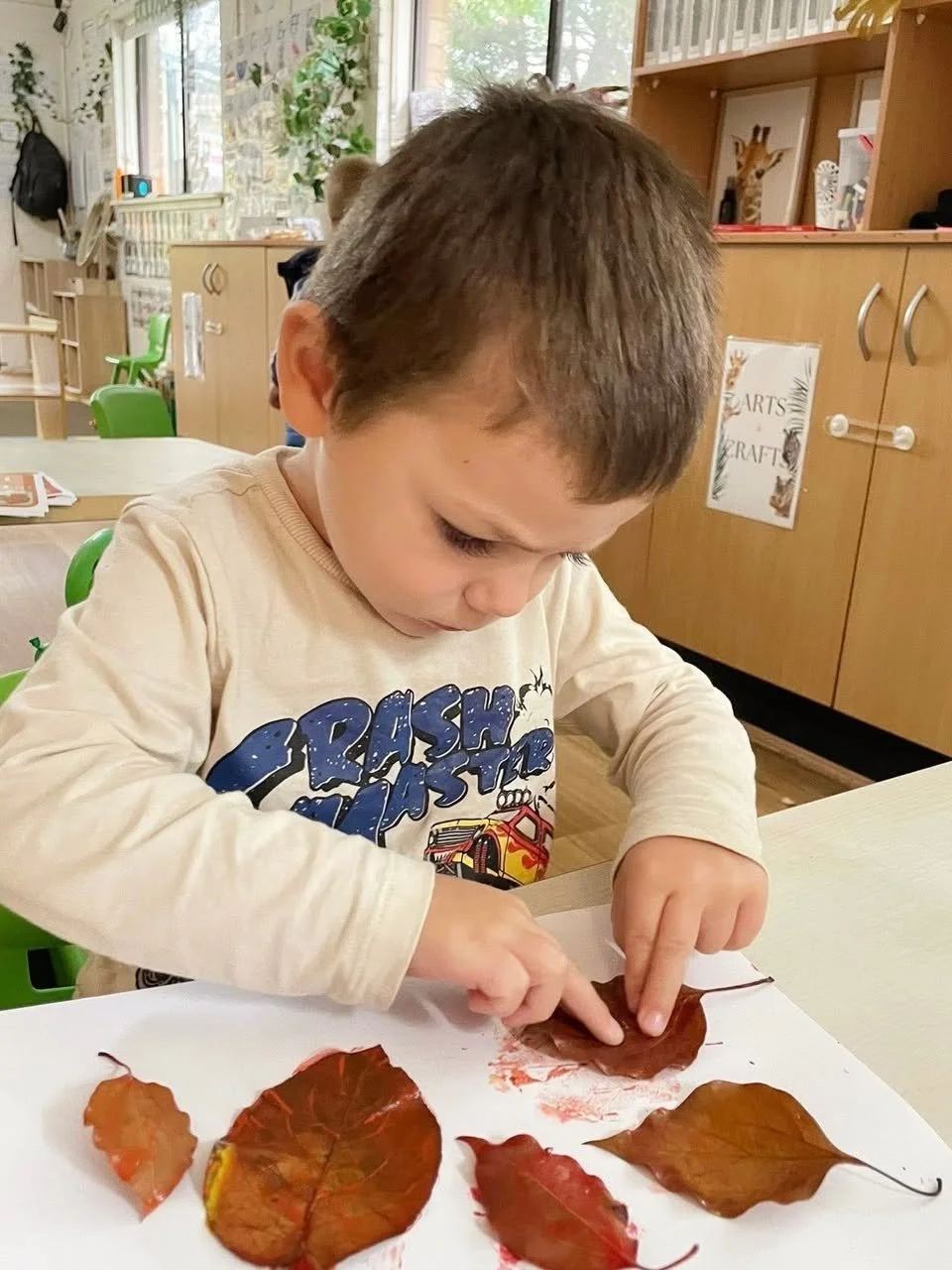
Gardens have played a big role too. As part of school readiness learning, children have spent time in the garden exploring plant growth and natural life cycles. They helped care for plants, made observations about what was changing and enjoyed the sensory experience of soil, leaves and water, all while developing responsibility and an appreciation for nature.
Turning Everyday Materials Into Something New
One of the simplest ways children learn about sustainability is by reusing materials in play. Cardboard boxes have become cubby houses, decorated inside and out with crayons. Paper plates turn into faces, spiders and masks. Containers and tubs become building materials, instruments and treasure boxes.
This kind of play teaches children to see possibilities in everyday objects rather than throwing them away. It also builds creativity, imagination and fine motor skills, and shows children that you do not need new things to have fun.
Children also learn by watching the adults around them. When educators turn off taps properly, reuse paper for drawing or collect natural materials instead of buying new resources, children notice. These small examples help sustainable habits feel normal rather than special, and many families find their children start reminding them at home to recycle, save water or turn off the lights.
Small Sustainable Habits for Families
Sustainability at home can be easy and fun for young children. Try a few of these ideas together.
Give your child the job of sorting recycling into the right bin.
Plant herbs or seeds in a pot and let your child water them and watch them grow.
Save boxes, tubes and containers for a "build anything" afternoon.
Take a bag on your next walk and collect any litter you see (with gloves on).
Turn off lights together when you leave a room and talk about why.
Raising the Next Generation of Earth Carers
When children learn to care for plants, sort recycling and reuse materials in play, they are building habits and values that will shape the kind of adults they become. To see how sustainability is part of everyday life in our rooms, book a tour at your nearest Chipmunks Childcare centre.
