
A toddler stands at a low table with a pair of tongs and a bowl of pom poms. Squeeze, lift, drop. One rolls away and she starts again, tongue between her teeth. It takes her four minutes to move six pom poms into an egg carton, and she is delighted. She has also just given the small muscles of her hand a serious workout, the same muscles that will one day hold a pencil, do up a zip and tie a shoelace.
This guide explains what fine motor skills are, why they matter and which activities suit each age, using things you almost certainly have at home.
Why Fine Motor Skills Matter So Much in the Early Years
Fine motor skills are the small, precise movements of the hands, fingers and wrists, working together with the eyes. They develop gradually from the first months of life, starting with a baby's whole-hand grasp and refining over years into the control needed to write a name.
They matter because so much of daily life runs on them. A child with confident hands can feed and dress themselves, join in at the craft table and manage a lunch box without help. That independence feeds confidence long before writing enters the picture. When school does begin, a child whose hands are ready can put their energy into ideas instead of the effort of holding the pencil.
Hand strength: squeezing, squashing and pulling build the power needed to control tools.
Pincer grip: picking up small things between thumb and finger is the base of a good pencil grip.
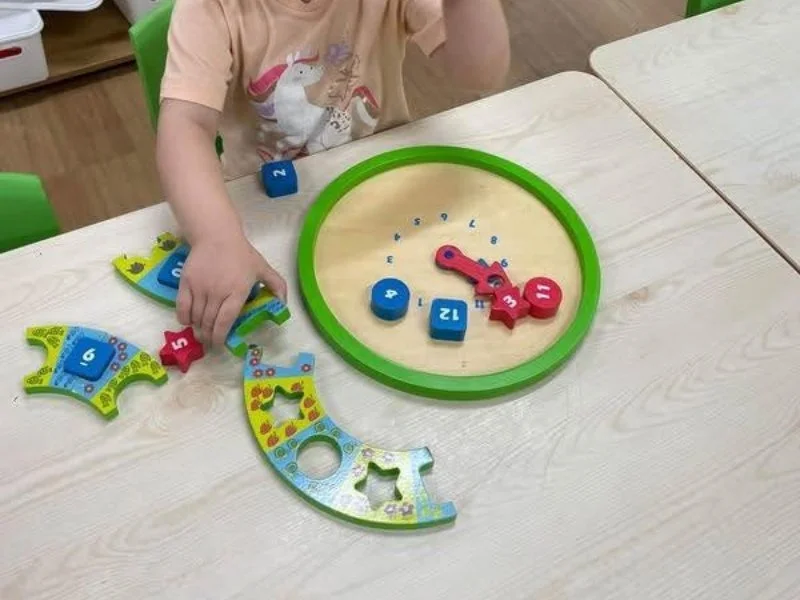
Hand-eye coordination: threading, stacking and pouring teach eyes and hands to work as a team.
Two hands together: one hand holds while the other does, as in cutting or opening a container.
Wrist and finger control: turning, twisting and tracing prepare the hand for forming letters.
Independence: buttons, zips, taps and cutlery all depend on fine motor control.
Fine Motor Skills Activities by Age
Children develop at their own pace, so treat these as a guide and choose what suits your child.
Babies
Reaching for and grasping a rattle or soft toy
Passing a toy from one hand to the other
Exploring different textures such as fabric, wood and silicone
Picking up soft finger foods once they have started solids
Tummy time, because pushing up on open hands strengthens the whole arm
Toddlers
Posting lids or large buttons through a slot cut in a container
Stacking blocks and knocking them down
Scribbling with chunky crayons or chalk
Turning the pages of a board book
Squashing, rolling and poking playdough
Pouring water or rice between cups
Using tongs or big tweezers to move pom poms
Preschoolers
Threading beads or pasta onto string
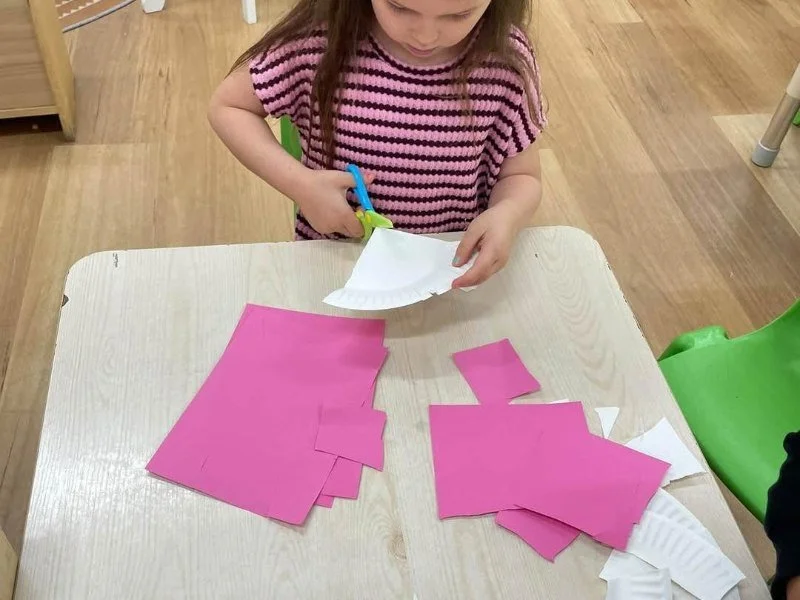
Snipping, then cutting along lines, with child-safe scissors
Pegging washing on a line
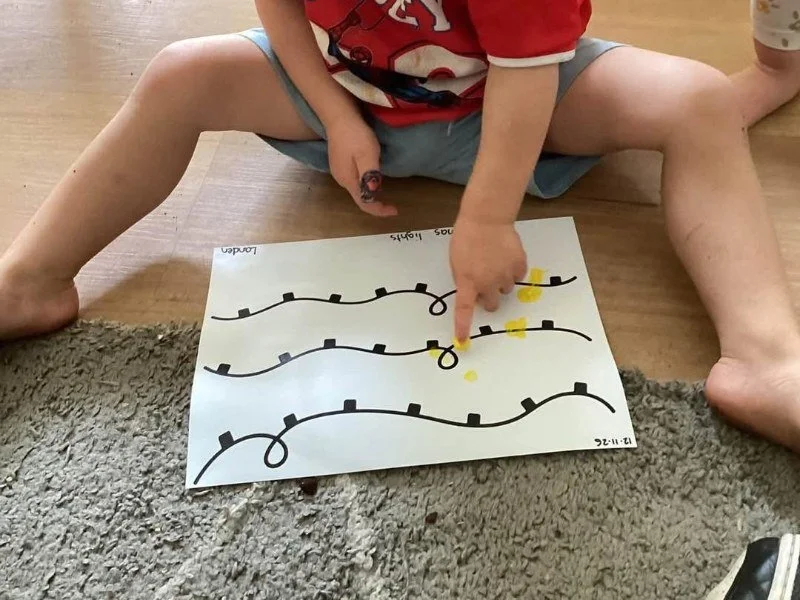
Drawing shapes, people and patterns
Using an eyedropper to mix coloured water
Building with small construction pieces
Beginning to write the letters of their own name
What This Looks Like in Our Rooms
In our rooms you will usually find a fine motor station set up every day, and the materials change to match what the children are interested in. If the room is busy with dinosaurs, the tweezers might be rescuing small dinosaurs from a tray of sand. If it is spring, children may be threading flowers or snipping herbs from the garden.
Fine motor practice is also built into routines. Children are encouraged to serve their own food, put on their own shoes and manage their own belongings. These moments take longer than doing it for them, which is exactly the point.
For children in the year before school, educators introduce more deliberate pre-writing work: tracing patterns, drawing with purpose, cutting on lines and writing their name. It is offered through play and always starts from what each child can already do.
Big Muscles Come First
It surprises many families, but strong hands start with a strong body. To control a pencil, a child needs a stable core and shoulders to sit upright and hold their arm steady. Those are built by climbing, hanging, crawling, pushing and carrying.
So if your child would rather be on the climbing frame than at the drawing table, that is not time wasted. It is groundwork. Vertical surfaces help as well: painting at an easel, drawing with chalk on a wall or sticking magnets on the fridge strengthens the shoulder and wrist in a way that a flat table does not.
The reverse is also true. A child who is pushed to write before their body is ready often grips too hard, tires quickly and decides they are "bad at it". Following the natural order, big movements first and small ones after, protects both skill and enthusiasm.
How Pencil Grip Develops
Pencil grip is not something children either have or lack. It moves through stages. Toddlers usually hold a crayon in a closed fist and draw from the shoulder. Next the fingers point down the crayon and the movement comes from the elbow and wrist. During the preschool years, most children shift towards holding the pencil between the thumb and first two fingers, with movement coming from the fingers themselves.
You can support this without nagging. Short, chunky crayons and broken chalk naturally encourage a fingertip grip. So do tweezers, pegs and playdough. If your child is still using a fist grip as school approaches, mention it to their educators, who can suggest playful ways to help.
Bringing It Home
Most fine motor practice is hiding in ordinary jobs. No special equipment is needed.
Let them peel a mandarin, spread their own toast or stir the pancake mix.
Hand over the pegs at washing time.
Keep playdough and a few blunt tools within reach.
Offer short, chunky crayons instead of long thin pencils.
Build dressing time into the morning so they can try buttons and zips without being rushed.
Give them a spray bottle and a cloth and ask them to wash the outdoor table.
Tear paper for collage, and let them use the glue stick and sticky tape themselves.
Always supervise small objects with children under three.
Frequently Asked Questions
What are fine motor skills? They are the small movements of the hands and fingers that let us grasp, pinch, turn, cut, draw and write, guided by the eyes.
When should my child hold a pencil correctly? Grip develops in stages, from a whole-fist grasp in toddlers towards a three-finger grip during the preschool years. Plenty of play that strengthens the hand matters more than correcting early.
Should I worry if my child avoids drawing or cutting? Many children simply prefer active play, and that play is building the strength their hands need. If your child finds everyday hand tasks much harder than others their age, or becomes very frustrated, talk with their educators or your GP.
Ready Hands, Ready Learners
Fine motor skills are built a pom pom, a peg and a playdough snake at a time. None of it needs to feel like practice. Given time, interesting materials and the chance to do things for themselves, children's hands get ready on their own schedule.
If you would like to see how we weave fine motor skills into each day, book a tour at your nearest Chipmunks Childcare centre.
